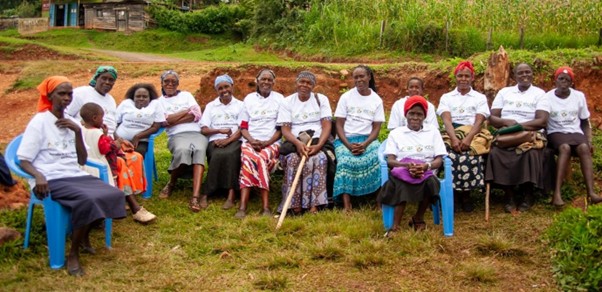
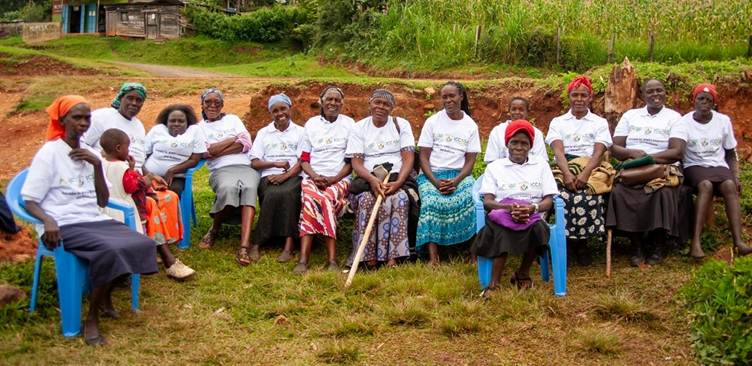
HARE women in Nyamira © Cmeru/ICCASA
Women with disabilities are often ignored and hidden from society.A lack of information and awareness, physical inaccessibility, poverty, stigma, and exclusion from decision-making all play a part. This gap and vulnerability has been further excaberated by the extreme effects of climate change.
In Kenya, the Centre of Inclusive Climate Change Adaptation for a Sustainable Africa (ICCASA) is bridging the gap. ICCASA has piloted HARE-Project “empowering women with disabilities to navigate Climate change and harness pportunities in the avocado value chain in Nyamira County, Kenya”. HARE brings together 20 women with diasability together promoting climate resilience and economic empowerment.
Recently as part of the monitoring visit, ICCASA profiled six of the women with disabilities benefiting from the project.
Callen Bwire’s Story
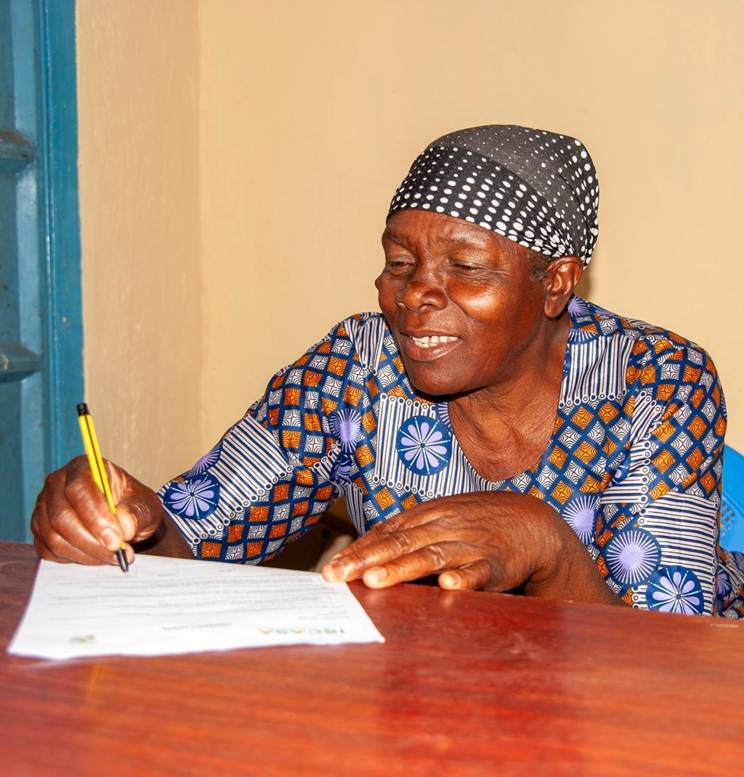
Callen during ICCASA mission visit in Nyamira
Callen Bwire sits quietly as she awaits more members to join the oil extraction training at the ICCASA center in Nyamira. At 62, her eyes carry the weight of years of motherhood, of loss, and of waiting. Six avocado trees stand at the edge of her shamba, tall but barren. “They don’t bear fruit,” she says. “I planted them, but I can’t remember when.”
Six years ago, an accident changed everything. Callen became physically disabled. Tasks she once did with ease like farming, walking to the market, tending to her home became impossible. Her household of nine depends on her, but she depends on others. Her daughter Mary helps her around the house, and sometimes she hires someone to work the farm. “I want to do more,” she says. “I want to be busy. I want to earn.”
Callen’s story is not just about disability but also of exclusion and stigma. She was once part of a women’s savings group, a chama, hovewer, once she got disabled she was chased away. “They said I had no income,” she sadly recalls. “They didn’t see me as someone who could contribute.”
The changing climate has made things worse. The rains are unpredictable, and her small farm struggles to produce. The avocado trees once symbols of hope remain fruitless. Yet Callen dreams of climate-friendly seedlings, ones that can bear fruits. “I want to learn,” she says. “I want to sell oil and feed my family.”
Despite the stigma and the silence that often surrounds women with disabilities, Callen is grateful. “ICCASA remembered us,” she says with a smile. “They saw us. They listened. That means everything.”
Madeline Kwamboka’s Story
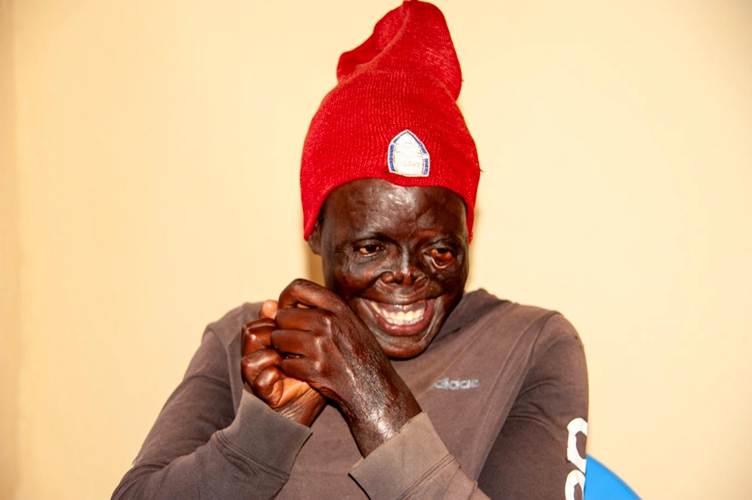
Madeline smilling during ICCASA visit.
“People look at me and see what I lack,” she says. “Not what I can contribute.”
At just 23 years old, Madeline Kwamboka carries a quiet strength unheard of at her age. Her physical disability a maxillofacial trauma from an accident when she was too young to remember. Her disability has led to a lot of trauma and stigma coming from with people judging and pitying her. This affected her formal education and self esteem.
She lives with her parents in Nyamira County, in a household of three. Her parents’ in their small farm has two avocado trees. Life has been very difficult some days, “we sleep hungry,” she admits. “But I believe things can change.” Through ICCASA’s she is among the girls and women selected to be as part of the Hare project. “It’s the first time I’ve felt seen,” she says smilling. “I feel like I belong.”
Madeline understands the avocado value chain as a pathway to transformation. “We can make oil, sell it and earn income,” she says.
Her dream is simple but powerful is to see women and girls with disability working together, earning together, and opening a joint bank account symbolizing collective strength. “We are not weak,” she says. “We have untapped potential”.
Nachoka’s Story.
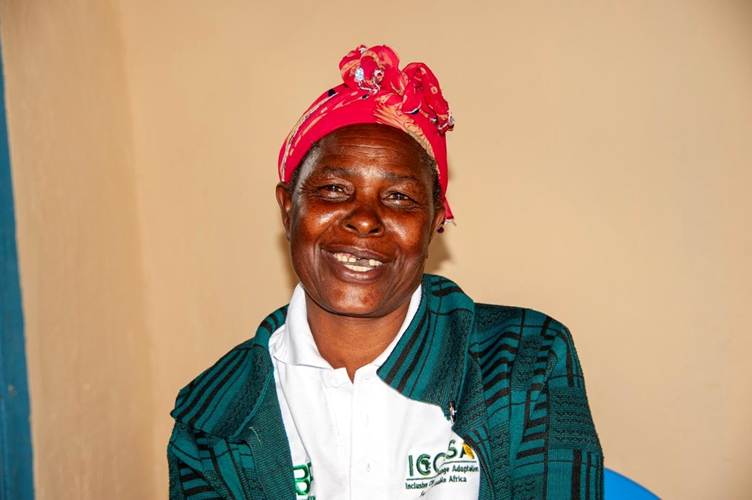
Nanchoka, aged 53, knows the land better than most. Her single avocado tree bears fruit twice a year enough to feed her family and sell a few at the market. But the soil is rocky, and the weather is cruel. “Sometimes the rain comes too hard, sometimes not at all,” she says. “It ruins everything.”
Disabled since age seven, Nanchoka relies on her husband’s banana deliveries and her own vegetable business to survive. She earns nearly 500 shillings (5 USD) a week. Her farm belongs to her husband, and she often needs help to work it. “I can’t do it alone,” she says. “But I want to learn how to make oil. I want to use machines.”
Her dream is for women with disability to work towards building something sustainable. “We need each other,” she says. “We can’t wait for help that never comes.”
Martha Kemunto’s Story
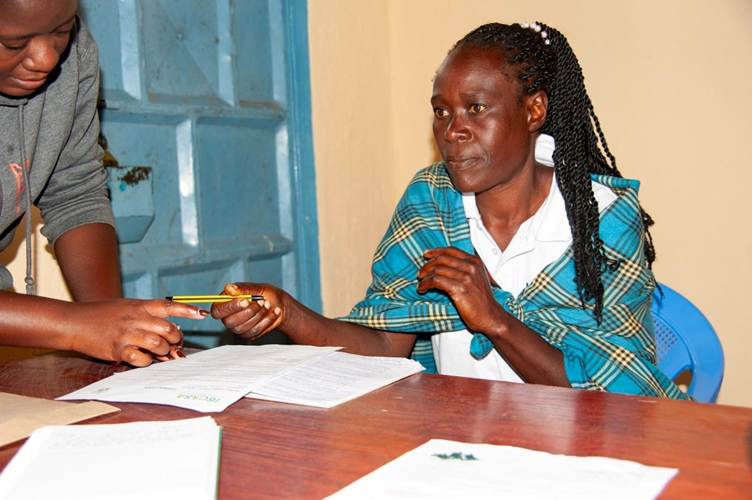
Martha Kemunto’s avocado tree dried up last season. “It was the only one,” she says. “I had hope in it.” At 40, she’s a mother of five and a caregiver to a household of seven. Both she and her husband live with disabilities, and their days are shaped by this scarcity.
She receives help from well-wishers, but it’s never enough. “Sometimes there’s no food,” she says. “Sometimes everyone is sick.” Still, she dreams of learning to make avocado oil and supporting her household.
Alice Chweya’s Story
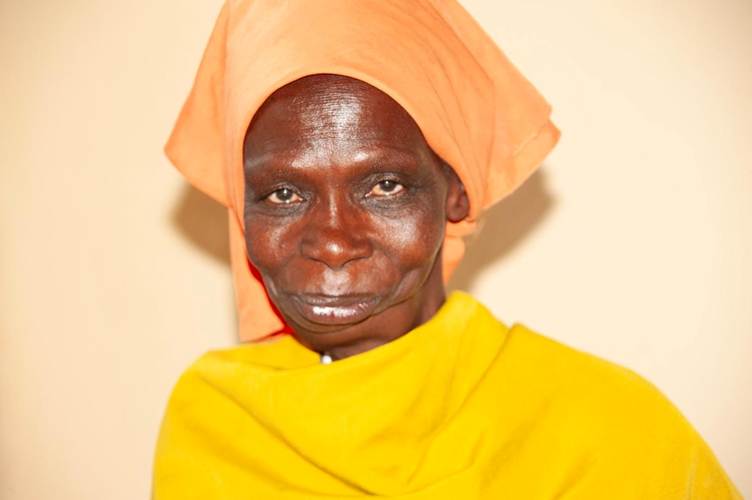
At 70, Alice Chweya farms with one hand. Widowed and living alone, she takes hours to do what others finish in minutes. “I don’t have much,” she says. “But I have land. I just need support.”
She never went to school, and her children help her only once a year. She heard about ICCASA’s project from a friend and joined to be the pioneers that will bring change. “I want to earn money,” she says. “I want to stop depending on others.”
Her parting words are filled with faith: “God loves us. We must love and support one another.”
Hebisiba’s Story
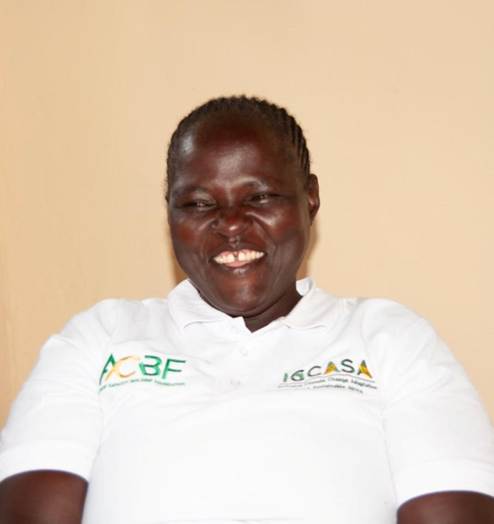
Hebisiba, 41, was born with a physical disability. Her husband has a neurological condition, and together they raise five children. She earns about 500 shillings a month working on farms, but it’s never enough. She feels neglected, often unable to afford transport or reach the market.
She has two avocado trees and dreams of turning them into oil for domestic use and income. “I want to learn,” she says. “I want to process it myself.”
Her message to women with disabilities is simple “Let’s form a community. Let’s work together.”
Josephine Nyamusi’s Story
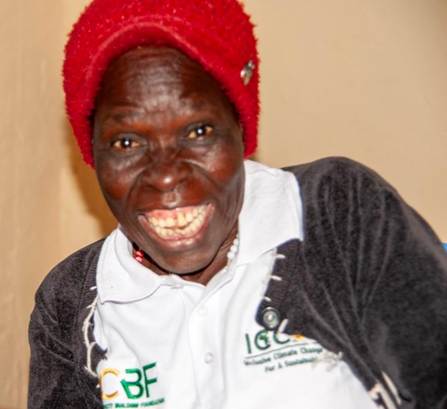
“We must not hide. We must register and be seen.”
Josephine Nyamusi, 60, is a tailor and knitter. She earns 1,500 shillings a month, barely enough to feed her household of three. Her physical disability began at age nine, she can only move with the help of others, and she now raises a 10-year-old child alone.
She dreams of selling avocado oil to supplement her income. “I want to do more than tailoring,” she says. “I want to support my child education giving her a better chance at life”.
These stories resonate and are similar to the stories of the other women support by the project.
HARE project is a partnership between ICCASA and the African Capacity Building Foundation (ACBF), seeking to promote climate resilience and economic empowerment of Women with Disabilities (WWDs) in Kenya. Further it emphasizes both organizations commitment to build capacity and empower the most vulnerable in Africa.