By Josephine Marura Mwatibo, AWAC Kenya Country Convener and STREVOW Project Beneficiary
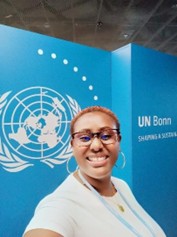
When I walked into the World Conference Center in Bonn, Germany for the 62nd Session of the UNFCCC Subsidiary Bodies (SB 62), I carried not just my luggage, but the weight of my community’s hopes. As a Woman With Disability from Kenya, representing both the STREVOW Project (Strengthening the Resilience and Voice of Women with Disabilities on Climate Change) and the African Alliance for Women with Disabilities in Climate Action (AWAC Alliance), I knew this was more than a conference. It was a turning point.
Our presence at SB 62 was a direct challenge to decades of systemic invisibility. For too long, Women With Disabilities—particularly from the Global South—have been excluded from climate negotiations, even though we bear the brunt of climate impacts. This time, we were at the table. And we made it count.
One of the most powerful lessons I learned at SB 62 is that policy is not neutral—it is personal. Every comma in a UNFCCC text has consequences on the ground; whether we are included in climate finance, considered in early warning systems, or left behind in National Adaptation Plans. I joined daily strategy meetings with the Global Disability Caucus and the Human Rights and Climate Change Working Group, where we pushed for disability in the Global Goal on Adaptation and the New Collective Quantified Goal on Climate Finance.
We were not alone. The Women and Gender Constituency, Indigenous Peoples, Youth, and Environmental Human Rights Defenders stood with us. This solidarity reminded me that intersectionality is not just a theory—it’s a survival strategy. Together, we called for formal recognition of a Disability Constituency within the UNFCCC and for language that reflects our lived realities in climate texts.
At the side event “Gender-Just and Disability-Inclusive Climate Action: Closing the Data Gap”, hosted by UNDRR, IDA, and CBM Global and as the moderator of the session, I shared my own experience living with an invisible disability in Kenya. I spoke of how adaptation efforts often overlook us—not out of malice, but because we are missing from the data. The session made it clear; data that isn’t disaggregated by gender, age, and disability is dangerous. It allows policies to ignore us. It justifies budgets that exclude us. It silences our stories. The STREVOW project’s commitment to evidence-based advocacy found validation in every nod from global experts in that room.
My participation at SB 62 was not the end—it is the beginning of a renewed commitment. I return with concrete insights and inspiration that I will integrate into the STREVOW Project’s next phase:
- I will convene dialogues with grassroots women with disabilities to share what I learned, and explore how our local realities can inform national climate planning.
- We will strengthen our advocacy by training women with disabilities in climate policy and negotiation language, preparing them to engage directly in county climate platforms and beyond.
- Using lessons from the Global Disability Caucus, I plan to help develop a STREVOW-led Position Paper to guide future engagement in Kenya’s Nationally Determined Contributions implementation.
- We will also work to disseminate our community storytelling initiative, showcasing lived experiences of climate impacts among Women With Disabilities—linking personal narratives to global frameworks like the Paris Agreement and the Sendai Framework.
This knowledge will also help us to better connect our local advocacy with global opportunities—ensuring that no Woman With Disability is ever left behind in climate decision-making.
As we look toward COP 30 in Brazil, I carry with me not just lessons, but commitments. We must continue to:
- Push for the recognition of a formal Disability Constituency under the UNFCCC.
- Ensure Women With Disabilities lead in the review and implementation of Nationally Determined Contributions and National Adaptation Plans.
- Advocate for inclusive climate finance that directly supports Organizations for Persons with Disabilities and women-led grassroots groups.
- Build our capacity to influence, negotiate, and lead because presence without power is not enough.
To development partners, governments, and climate actors: don’t just fund us—walk with us. Women With Disabilities are not passive recipients of aid. We are leaders, innovators, and frontline responders to climate injustice. Invest in our leadership, amplify our voices, and co-create solutions with us—not for us. Because until climate justice includes us, it isn’t justice at all.