By: Faith Gikunda
Setting the Scene
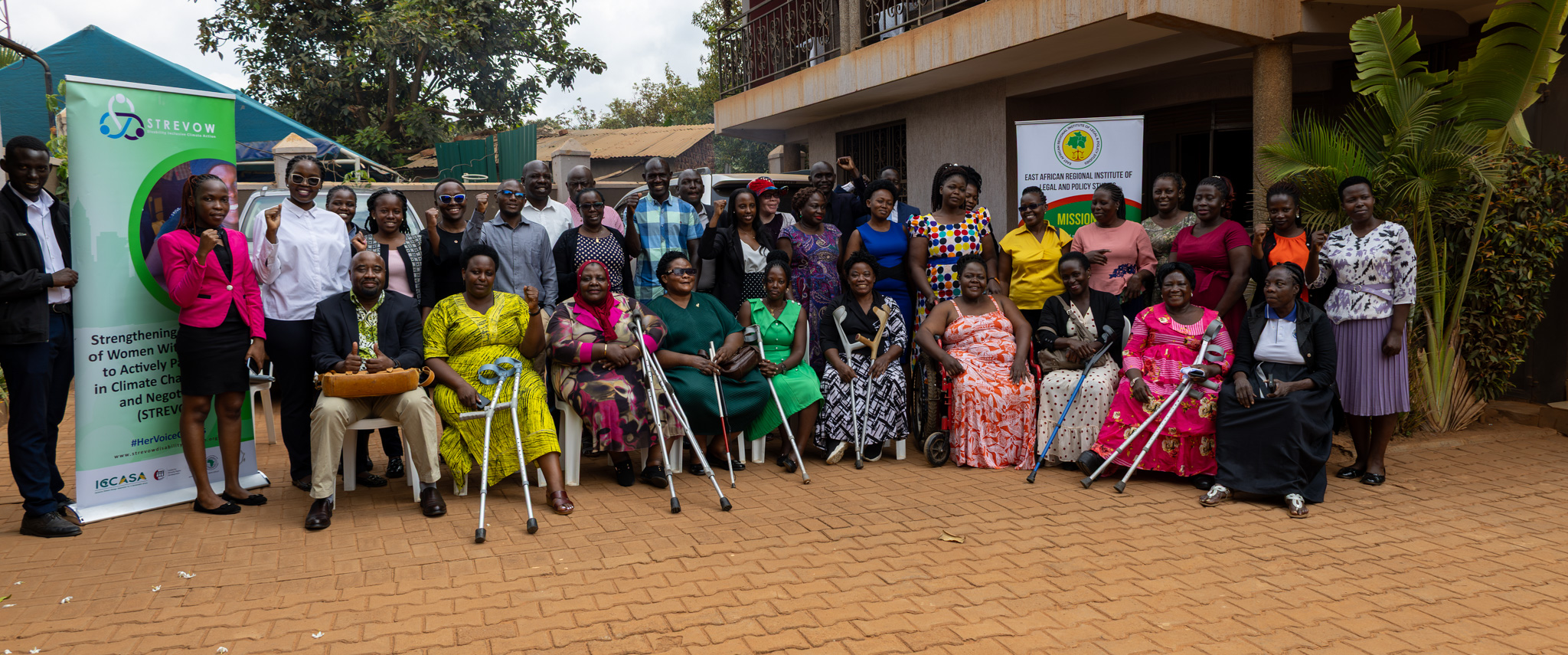
The Building Capacity and Establishing an Alliance for Women with Disabilities in Climate Action workshop, held on 18th and 19th September 2024 in Nairobi, Kenya, signified a transformative step towards inclusive climate action. The event culminated in the official launch of the African Alliance for Women with Disability in Climate Action (AWAC), an initiative designed to amplify the voices of women with disabilities (WWD) in climate advocacy. Organized by Inclusive Climate Change Adaptation for a Sustainable Africa (ICCASA) and the Center for Minority Rights Development (CEMIRIDE), this workshop was part of the Strengthening the Voices of Women with Disabilities to Actively Participate in Climate Change Policy and Negotiations (STREVOW) project.
Bringing together women from Eastern African nations, the workshop focused on empowering WWD to actively engage in climate action and policy-making processes. With a core emphasis on capacity building and alliance formation, the event aimed to address the unique challenges WWD face in climate advocacy while creating leadership and collaboration opportunities. It had two primary objectives: enhancing WWD’s knowledge, advocacy skills, and leadership potential in climate policy, and establishing a network for continuous collaboration and advocacy for inclusive climate action.
Workshop Approach
The workshop employed a blended approach to ensure rich interactions and learning. Through keynote presentations, panel discussions, and personal storytelling, participants were able to share experiences and absorb new insights. A variety of formats facilitated engaging knowledge exchange, while panel discussions featured diverse voices, including WWD climate advocates, experts, and stakeholders. This blended approach provided a dynamic learning environment that balanced theory, practice, and personal narratives.
Key Panel Discussions and Speakers
WWD Voices: Experiences, Challenges, and Engagement in Climate Policy and Negotiations
This panel highlighted the disproportionate impacts of climate change on women with disabilities and the barriers they face in climate advocacy. Panelists from Tanzania, Kenya, and South Sudan shared personal stories that illustrated the unique vulnerabilities WWD endure during extreme climate events, such as droughts, floods, and food shortages.
Faustina Urassa from the Songambele Initiative Organization in Tanzania recounted how she was left behind during a flood disaster due to her physical disability, underscoring the urgent need for greater sensitization on supporting WWD during climate emergencies. “In case of disaster, everyone thinks of how they can save themselves. That is human nature. It is important to ensure intensified advocacy and sensitization to the public on how they can support WWD in case of disaster,” She said.
Similarly, Caroline Atim, Director of the South Sudan Women with Disabilities Network, discussed the cultural barriers and economic hardships that prevent WWD from participating in decision-making processes, often leaving them sidelined in climate discussions. “Women With Disability have so much to offer based on experience. Unfortunately, quite often, as much as I would like to participate in meetings, I am left out because it becomes too expensive to facilitate myself and my sign language interpreter. With more sensitization and advocacy, we can rally more stakeholders to facilitate WWD to participate in decision-making processes.” She observed.
Paul Mugambi, a disability-inclusive humanitarian expert from Kenya, emphasized the role of digital technology in empowering WWD, calling for the development of assistive devices that would enhance their participation in climate change action. The need for innovative solutions and accessibility was echoed by panelists from Ethiopia and Kenya, stressing the importance of ensuring WWD have the tools and opportunities to engage fully in climate advocacy.
Climate Change and Disability: Conversations with Experts
Experts in this session stressed the need for greater representation of WWD in climate decision-making processes, from the Intergovernmental Panel on Climate Change (IPCC) to international climate negotiations. Dr. Cromwel Lukorito, Vice Chair of IPCC Working Group II, encouraged WWD to share their successful interventions to create a movement of collective climate action. He maintained that by collaborating and scaling proven solutions, stakeholders can avoid redundancy and maximize climate resources for inclusive action.
Hawa Gedi from the Intergovernmental Authority on Development (IGAD) in Eastern Africa noted that Africa has robust climate policies, but stakeholders need to align their interventions with these frameworks to ensure that WWD are fully included in the benefits of climate action.
Experts also highlighted the importance of collecting disaggregated data on WWD to inform more inclusive and effective policy-making, ensuring that climate actions address the specific needs of marginalized populations.
Voices From The Government
The presence of government officials in the workshop showcased their commitment towards advancing gender inclusive climate interventions. In her keynote speech on behalf of the Gender Department, Yvonne Ndanu, Senior Gender Officer State Department for Gender and Affirmative Action Ministry of Gender, Culture, The Arts and Heritage said, “It is important to note that by empowering PWDs to take an active role in climate negotiations, we are not only fostering justice and equality but also creating more effective and resilient strategies that benefit the entire global community.” Further emphasizing the need to engage WWD in policy and leadership “We must ensure PWDs are actively participating in the shaping of climate policies and negotiations. Their voices must be heard at every table where decisions about our collective future are being made. Inclusive policies are stronger policies, and negotiations that consider the needs of all people are more likely to create equitable and sustainable resources.”
Michael Okumu, Deputy Director, Climate Change Directorate, Ministry of Environment Climate Change and Forestry retaliated the government department’s commitment to support WWD with the tools and skills to enable them actively participate in climate change policy and negotiations. “As a government department that is extensively involved in climate change negotiation and policy, we acknowledge the role of each individual and particularly those that need most support to actively participate in climate change initiatives both at national and global level. We are committed to empower them through taking them through the UNFCCC processes and helping them to identify their position in influencing policy and negotiations. It is only by doing this that we will ensure no one is left behind,” He said.
Ruth Mukami a representative from The National Gender and Equality Commission (NGEC), emphasized the need to ensure that all climate change interventions have a gender lens right from design to implementation and scaling up level. She underscored the need to engage inclusive ideas particularly focusing on the target project beneficiaries to ensure that their views inform the interventions that are undertaken. “This will ensure that what is being implemented is by and for the people who need it most,” she observed, while also noting that NGEC is committed to being part of the WWD alliance to support in gender inclusive policy and interventions.
Building a Collaborative Network
This session marked the formal establishment of the African Alliance for Women with Disabilities in Climate Action (AWAC), a transformative network designed to foster collaboration among WWD across Africa. The alliance will create a forum for stakeholders to advocate for the inclusion of WWD in climate-related decision-making, providing a platform for sharing stories, accessing training opportunities, and working together on policy analysis.
Key Outcomes of the Workshop
The workshop led to several key outcomes that will shape future climate advocacy for WWD:
- Capacity Building: Participants gained practical skills to engage in climate policy discussions at national and international levels.
- Formation of AWAC: The official establishment of AWAC provides a platform for ongoing collaboration and advocacy for WWD in climate action.
- Disaggregated Data Collection: Participants committed to collecting data on WWD to ensure informed and inclusive climate policies.
- Accessibility in Public Participation: Government agencies were urged to make public participation more accessible to people with disabilities.
- WWD Participation in COP29: Lessons from the workshop will help WWD prepare for COP29, ensuring their voices are heard during the Gender Day at the global climate summit.
- Documenting Case Studies: Stakeholders committed to documenting case studies on the impact of climate change on WWD to advocate for inclusive policies, sharing these through the STREVOW online platform.
- Policy Engagement: Through the lessons learnt, WWD will enhance their policy analysis skills to engage effectively in climate policy-making.
- Applying a Gender Lens: Going forward, participants will integrate gender and disability considerations into climate programs and policies.
- Media Sensitization: The workshop was grace by media presence, where they got an opportunity to interact with WWD, listen to their stories. They also engaged stakeholder in their role in empowering WWD in climate action. At the end of the day, media had a better understanding on how climate affects WWD and how media can be involved in advocating for inclusive climate action.
Outlook
The Building Capacity and Establishing an Alliance for Women with Disabilities in Climate Action workshop concluded with a strong sense of learning and knowledge exchange. The formation of AWAC was the crème-del-a-cream of the two-day interactive engagement with the alliance marking the kick off of a strong African movement that will support WWD to actively participate in climate action and also provide stakeholders with a platform to co-create disability friendly climate interventions for all by all.
Armed with more knowledge and a collaborative network, participants are now better equipped to push for inclusive climate policies and engage in international climate negotiations, including COP29.
This workshop not only empowered WWD but also laid the foundation for sustained advocacy, ensuring that climate action in Africa is truly inclusive and leaves no one behind.